Monday, April 10, 2017

Make Me Whole


Although I'm posting this next video on the Monday of Easter week, the events in this video technically took place before Palm Sunday. However, I thought it would be fitting to share this video on Monday because of the strong foreshadowing of what was to take place at the end of the week.


The story in this video is that of Lazarus and his two sisters, Mary and Martha. We know precious little about these three individuals other than that they were close friends of the Savior. Particularly, we are told of one time when Jesus is invited to dinner and Martha is caught up being a typical "Martha Stewart" while Mary is less interested in hosting the perfect dinner party and more interested in spending time with her guest. Although Jesus' gentle words might be taken as a rebuke when he tells Martha that Mary had chosen the good part, I tend to believe that He might have in fact been saying that Mary had chosen the better part for her.

Personally, I feel that Martha had the best of intentions when deciding to make her very best effort to serve her master. Did not the woman who anointed Jesus' feet with very costly oils and perfumes in her alabaster box receive the Savior's praise when His disciples otherwise thought the anointment a waste that could have better served the poor? I'm pretty sure that our perfect exemplar was not showing any hypocrisy here and was not making any general statement about the merits of expensive oils, party planning, or listening and attentive ears. I think that each of these three acts was an attempt to serve and connect with Christ in a personal way, and I think that Jesus recognized and was grateful for each gesture and act of love. I think that there are most definitely good and better ways to show forth our love. Personally, I would contend that there isn't a single best way to show forth our love to our Master. But each of us should strive to find some way that is a personal best way for each of us when we are evaluating gifts that we might offer our King. Martha was reminded gently that, ultimately, there were more important things than making sure that the dinner place settings were aligned just so. But I don't believe that the Savior was telling her that her service and gifts to Him were unacceptable or warranting criticism.

Looking forward in time, we are again introduced in the scriptures to Mary and Martha at the unexpected death of their brother Lazarus. When Christ comes to meet these sisters, we are again reminded of their close friendship when Jesus is moved to tears upon sharing their grief. As a child, this was the verse of scripture that my friends and I joked about sharing in Sunday School when it was our turn to recite a favorite scripture. Why? Because it was only two words, Jesus wept. Having put aside childish things, I now can appreciate the beauty and significance these two words and of this glimpse into our elder brother's raw emotions in this moment. We are asked as disciples and saints of God to mourn with those that mourn and to bear one another's burdens that they may be light. Without a doubt, our Savior has borne our burdens making our yoke light. Without a doubt, we can be assured that He stands close by mourning along with us when our griefs are near the surface. And He knows how to succor us because of what He experienced for us in the Garden as He, in some way that I will never fully understand, took upon Himself and experienced every burden, every sorrow, every joy, every emotion that we will ever experience. Without a doubt, He understands.

One more thought about the story behind today's video. We read in the scriptures that by the time Jesus answered the call of Mary and Martha and came to Judea, Lazarus had lain in the grave four days. Jesus had previously told his disciples that Lazarus' sickness was not unto death, but for the glory of God. And we read that Jesus purposely delayed his journey to heal Lazarus by two days. With what we know about the love Jesus felt toward Mary, Martha, and Lazrus as evidenced by his tearful weeping upon meeting the mourning sisters, this two day delay might seem out of place. But is it? Some quick mathematical reasoning would suggest that, had Christ not delayed for the two days, He would have still been too late to save Lazarus by two days. So one might argue that the Savior knew there was no cause to rush and that He might have chosen to complete some business before making His journey. I tend to believe that the two day delay had other significance and purposeful intent.

Lazarus' raising from the dead was far from the first miraculous raising in the scriptures. Jesus raised both Jairus' daughter and the son of the widow of Nain from the dead. Both Elijah and Elisha raised souls from the dead. Another miraculous raising was the result of a body simply coming in contact with Elisha's bones upon temporarily being cast into Elisha's sepulcher at the signs of an approaching enemy. So the raising of Lazarus from the dead was not a new, unprecedented miracle. But, to those who witnessed the miracle, it was unprecedented and exemplified the glory of God as Jesus prophesied. Why? According to Jewish custom, the spirit would linger with the body for three days after death and, upon the fourth day, resurrection would no longer be possible. When Jesus commanded that the stone be taken away from the tomb, Martha was horrified at the prospect, suggesting that her brother stinketh. I would guess that Jesus' disciples knew that He had raised others from the dead. I am pretty sure that they had faith that He could do so again. However, as evidenced by Martha's reaction, I believe that most of them didn't even consider such a miracle at this moment given their tradition of the spirit and the body. In delaying two days and waiting for the fourth day after Lazarus' death, Jesus was demonstrating His complete and total power over death, something He would be demonstrating again in the coming weeks on the Sunday following Passover.

Thinking about the miracle of Lazarus, I am reminded of my own sister, Amy. My sister died at the age of three in a tragic accident, and I still vividly remember the grief and pain I felt in the days that followed. I generally keep these memories close to my heart and don't often share them with others. When I hear the glorious chorus, I am the Resurrection, I think about Amy and other loved ones who have gone before me. I think about the joy and majesty that accompanies my faith that I will be able to see them again. I am the resurrection and the life. He that believeth in me, though he were dead, yet shall he live! What a wonderful hope! What a miraculous prospect! O Death, where is thy sting? Where is thy victory? Paul answered his question to the people of Corinth in his epistle to the people of Rome, We are more than conquerors through Him that loved us!

I am so grateful for the Savior's healing power. Not only will He make me whole when I will, along with each and every one of you, be resurrected from the grave; but He has the power to make me whole each and every day as I seek for spiritual, emotional, mental, or physical healing from my Savior. I am happy to say that I have selected Jesus Christ as my primary care physician. Without a doubt, He is the Healer of Healers and the King of Kings. And though the rising costs of healthcare are a heated topic of debate in today's world, my personal co-pay costs to cover the valuable care I receive at His hand seem so insignificant to me. I will happily pay my mite for such healthcare. However, I know that, even though the monetary value of my co-pays and premiums seems little, my personal contribution can and should be as valuable and precious as the Widow's mite. I love the words of Christina Rossetti who ponders the gifts of the shepherds and the wise men to the Christ child, "What can I give Him, poor as I am? If I were a shepherd, I would bring a lamb; If I were a Wise Man, I would do my part; Yet what I can give Him: give my heart." Like the Aramean commander Naaman, who was prepared to give any sum of money to seek miraculous healing from a Heavenly source, I will discover that silver and gold, of which I have none, cannot buy the miracle I seek. But such as I have, I can pay the true cost to have the Savior make me whole. Here's my heart, O take and seal it, seal it for Thy courts above.

God Bless!


**********
Touch my eyes and bid them see that my gaze might pierce the veil,
And behold the wondrous scene that, in dreams, I've long beheld.
Oh, touch my heart and bid it know that ev'ry sorrow here is but a moment's tear,
And Thou wilt make me whole again.

Touch my ears and bid them hear all the glory of ?Thy truth,
That my hope might come of faith and no more require proof.
Oh, touch my heart and bid it know that, while in darkness here, the Light is ever near,
And Thou wilt make me whole again.

Then touch my lips and bid them sing songs of everlasting praise,
That my soul might then believe and give thanks through all my days!
Oh touch my heart and bid it know that ev'ry breath I take is by Thy tender grace,
And Thou wilt make me whole again.

**********
I am the Resurrection and the Life.
He that believeth in me, though he were dead, Yet shall he live.
And whosoever liveth and believeth in me shall never die!
I am the Resurrection.

Sunday, April 9, 2017

Hosanna!


Today, I finished editing my 8th and final Lamb of God video. What a joy it has been to create these videos. Rob Gardner's Lamb of God has been an Easter tradition for many years and has become a very important part of my life. I know that this work has the power to change lives. I know this because it has changed at least one life, that being my own.

When Lamb of God was first released on album, I purposefully held off purchasing the CD. I did this because I had a ticket to go and see Rob premiere this work live. I had seen most of Rob's other works--including Joseph Smith the Prophet, Saints and Pioneers, and The Price of Freedom--performed live but only after I had already grown to love the music from those works through CD albums. I thought it would be extra special to experience Lamb of God the first time live. Unfortunately, I discovered just days before the performance that I had a conflict and would be unable to use my ticket. Devastated, I ran to the store the very night I realized the conflict and bought the album. I lay in my bed with headphones in and soaked in the majesty of Lamb of God. And though I'm sure I shed a tear or two in disappointment at not being able to go, I shed many more tears from the Spirit in the music itself. 

When I heard that a group was performing this the very next year, I offered to hand out programs at the door if they were full staffed with violinists more talented than myself. I didn't care in what way I might contribute. I just knew that I needed to try to share this music with others. For six years now, I've had the privilege of participating with this group's annual performance of Lamb of God. And thankfully, they did in fact decide to let me play my instrument rather than serve as greeter. I still feel such a drive to share this music with others. 

As something of an experiment, I took some time last year to create my first Lamb of God video, one about Peter, Peter's story especially resonated with me last year, and I kept thinking about a scene from one of the LDS Bible Videos that depicted Peter's betrayal of Christ. The scene showed Peter ashamedly looking on as Christ was shoved past him. There was a brief glimpse between the two that struck me. In that glimpse, I saw Peter's shame. And I saw Christ's forgiveness. I felt a strong need to connect that visual with the moment in the song where Peter mournfully cries, "And when thou lookest for a friend, thou findest none for I have fled, Oh God! What have I done?"

The music and the video footage from the wonderful LDS Bible Videos lined up so beautifully. I simply had to click a few buttons as the video creation seemed to happen on its own. This year, when Thomas' story cried out to me, I couldn't sleep until I sat down to create a video for Thomas. And in the weeks since then, one song after another has nagged me until I have finally created a video for almost every song in Lamb of God. 

My video series now complete, I have decided to release each video here on my blog on each day of this Easter week that corresponds to the historical events each video is related to. I will likely re-post my old blog entries on the corresponding days this week for those videos I've previously shared on this blog.

**********

With today being Palm Sunday, I wish to share Hosanna (Thy Savior Hath Come). When I decided to make this video, I faced a dilemma. For my other videos, I had decided to almost exclusively use footage from the LDS Bible Video collection. I do not believe that this church's physical portrayal was either more historically accurate or more prone to inspire or direct people spiritually to the Savior. It is truly inspirational, that is true. And I do feel close to my Savior when I view these. But this was not the motivation behind my choice. Rather, I decided to use this source material because there was a great deal of footage available and because I wanted to portray a generally uniform depiction of Christ across the videos I was making.

The dilemma I mentioned that I faced in making this video is that there was only about one and a half minutes of footage from the LDS Bible videos that depicted the Triumphal Entry, but I had about four and a half minutes of music that I wanted to fill. And this song makes me feel so much joy and happiness when I think about joining my voice with the many, many who have sung Gloria!, Hosanna!, and Praise to God! in honor of our Redeemer and Savior. So, instead of showing a montage of Christ, I wanted to focus on that joy and happiness and on those brothers and sisters of mine who share this joy.

So I turned to any and all random video clips I could find that depicted this Biblical event. And the result was something that surprised me. I was at first critical of the lower resolution footage I found and the contrasting imagery over the course of the video. And I made a point to not include close-ups of the various actors portraying Jesus in this event with the exception of those clips from the LDS Bible Videos for continuity purposes. I think what surprised me most was that here were multitudes of people who, though they were not from different races and ethnicities for the most part, were costumed and portrayed in different flavors as directed by the various film producers or as guided by the particular impressions and views of their religious denominations. And the result was what seemed to me to be people from all over the world (or at least from diverse denominations and Christian persuasions and their respective stylistic depictions of Christ and this one event) uniting in joy and exultation and singing Hosanna and praise of our common Hope, our Deliv'rer, and our All.

This unified shout of Hosanna makes me wonder how many of these brothers and sisters of mine from all different walks of life and all different religious persuasions joined with me in that Heavenly choir that heralded the birth of the Savior and how many of us may have been singing from the Heavens at this joyous moment as well. Whether that Heavenly choir was open invitation or audition only, we have the opportunity now this Easter and every day to sing together in praise, regardless of our differences. I invite you to join with me in my song. And I hope you'll invite me to join with you in yours.

God Bless! 

**********

The Promise of Ages whom prophets foretold, 
For whom we have waited e'er long, 
Hath come to redeem us from slavery's yoke 
And deliver His people back home. 
Come, Israel, come and see He who shall reign, 
In whom we will ever rejoice, 
We hear the sound of the glorious refrain 
And it echoeth back in our voice: 

Hosanna! Hosanna! Thy Savior hath come, O Israel, 
And blessed He'll ever be called! 
Hosanna! Hosanna! Sing praises to God, 
For our Hope, our Deliv'rer, our All! 

Oh, why should we wander as strangers from Thee 
And turn from Thy bounteous hand? 
Restore and defend us, oh, set us free, 
That beside Thee we ever may stand! 

He looks, and ten thousands of angels rejoice, 
And myriads wait for His word; 
He speaks, and eternity, filled with His voice, 
Re-echoes the praise of her Lord: 

Hosanna! Hosanna! Thy Savior hath come, O Israel, 
And blessed He'll ever be called! 
Hosanna! Hosanna! Sing praises to God, 
For our Hope, our Deliv'rer, our All! 

Hosanna! Hosanna! Thy Savior hath come, 
Our Hope, our Salvation, our All!

Sunday, April 20, 2014

Hero of Heroes 2014

This is the Sermon that just keeps on giving. After watching Man of Steel in the theaters last fall, I knew that I would have to update my prior video to include new, insightful footage from this latest installment. 

At the risk of turning off would-be-watchers by adding a few minutes to the length of the video, I present Hero of Heroes 2014--bigger and better than ever before. If Warner Brothers cranks out any sequels that are half as inspiring to me as this latest installment, you may see even more updates in the future. Luckily for me, YouTube kicked the 15-minute video limit; but I may have to spend a lot more time editing it down and cutting back in the future should future installments prove as inspirational as this last one.

As today is Easter Sunday, my heart is full and tuned to my Lord, whose life and mission I celebrate today. May you experience the hope that is to be found through that wondrous Son and through the House of El as you remember Him who first loved us.


Friday, June 14, 2013

The Power of "One"

I was driving home a few days ago and listening to the radio. Ever since the last political election cycle, I have to admit that I listen to more talk on the radio than music. As hard as I've tried to kick the habit, I keep getting sucked into the chatter about political hot issues such as abortion, immigration, gun rights, and the like. I'll spare you my thoughts on any of these issues and instead focus on something I gained from talk radio that had absolutely nothing to do with the issues typically discussed on this medium.

This particular day, the host was interviewing the leader of an activist group of Christian women in support of some specific measure or reform. I can't remember what was said or which cause this group championed. What I do remember is the mission statement of this organization. Quoting from "John 3:16", the woman on the radio recited, "This is how we know what love is: Jesus Christ laid down his life for us. And we ought to lay down our lives for our brothers and sisters." 

It was immediately apparent to me that this Christian used a different translation of the Bible than the King James version that I regularly use. Personally, I feel that there is a real beauty and reverence in the language of that translation that enables me to feel the Spirit and understand the doctrines with clarity. I am incredibly grateful for William Tyndale and the other inspired reformers whose voices culminated in this beautiful translation of that wondrous book.

At the same time, I can understand how one might welcome a translation of the Bible written in a more modern and more familiar language that might appear more inviting and less intimidating. Without a doubt, the language of religion, specifically Christianity, is one that must be learned by immersion--by reading, by listening, and by speaking. As opposed to immersion in some other language, one need not obtain a passport and embark for distant shores. One need only find a local church house, or even a set of scriptures, and immerse himself or herself in those environs regularly. Too often, those fluent in this language may scare away those who would care to learn by using an advanced vocabulary rife with deep and complex doctrines. So I understand the need that some feel to read the Bible in a simple and familiar language in which fluency is more easily achieved.

But this particular New International version translation of this verse from John truly bothered me. As one of the core tenets of my faith, I believe the Bible to be the word of God, as far as it is translated correctly.  And this version of one of my favorite passages of scripture sure seemed to me to have more than just a few errors in translation.

I repeat the words I heard, "This is how we know what love is: Jesus Christ laid down his life for us. And we ought to lay down our lives for our brothers and sisters."

Now contrast that to the version from Tyndale and King James, "For God so loved the world, that He gave His only begotten Son, that whosoever believeth in Him should not perish, but have everlasting life."

As I read these two translations, I find two issues in their wording that particularly bother me. Issue number one. Both translations deal with understanding the bounteous and immeasurable love that was shown through the single greatest act to transpire during the long history of this Earth. One version, however, focuses on the love that was shown by He who was sacrificed for me. Now I cannot begin to understand how deep, how pure, and how complete my elder brother's love for me extends. And I will always look up to my brother as the person that I want to be someday. The other version, however, speaks of the love of a Father, not a brother. God, my Heavenly Father, loved me so much that He allowed His favorite son, the Brother I want to emulate, to lay down His life for me--the wayward, rebellious, and prodigal son.

Issue number two. Both verses teach what we must do as a result of the love that is and has been shown unto us. The first version states that we ought to lay down our lives for each other--at least we ought to be willing to lay down our lives as did Christ, the Good Shepherd and the great teacher who taught that greater love hath no man than this, that a man lay down his life for his friends. King James however, says that our obligation resulting from the Atonement of our Lord is much more simple and has nothing to do with sacrificing ourselves for another. One need only believe in Christ to be saved and partake of Eternal Life with our loving Brother and Father.
Now both the love of the Father and that of my elder brother are very real and beyond my finite comprehension. And the scriptures are very clear in the importance of both sacrifice and faith in Christ. But how could two versions of this powerful verse of holy writ be so very different and yet so complete in capturing the roles of the Father, the Son, and me in the Atonement? I felt a little like Joseph Smith who, in sharing his frustrations with the many different interpretations of scripture among the different sects, said, "The teachers of religion of the different sects understood the same passages of scripture so differently as to destroy all confidence in settling the question by an appeal to the Bible." In my case, the interpretations of the passage of scripture weren't the source of my confusion but the passages themselves. Which translation was correct? And if one was more correct, why did they both seem to me to be doctrinally sound and inspired?

As I got home, I decided to turn to the internet--the source of all Earthly wisdom. Despite the many traps and webs that have been weaved by another brother of mine, a serpent who might more aptly be described as a cunning arachnid in the context of the World Wide Web, the internet truly is a powerful tool that can be used for the best of purposes in furthering God's work and in easing our lives. I entered the following search terms: John, 3, 16, love, lay down lives, and translations. Thus spake Google: biblehub.com, biblestudytools.com, biblegateway.com, and topverses.com along with 43 million other hits. That's about 42.999995 million more hits than I needed. So I went to biblehub and quickly confirmed the correct citing of this verse from John by the woman on the radio according to the New International version of the Bible. Scanning the page, I quickly found that most translations of this verse appeared to be closer to the New International version than my King James version, including the English Standard, the New Living, the Holman Christian Standard, Webster's Bible, the Aramaic Bible in Plain English, and at least a dozen others. This was somewhat troubling to me. I've been able to recite John 3:16 from memory since I was a boy. It's words are so beautiful. It's message is even more beautiful. Now I was learning that much of Christendom was recording John the Beloved's words quite differently, in both a doctrinal and a literal sense, from those words that I have grown to cherish. What I saw next confused me even further. Biblehub cited the words of King James to be more aligned with those that I heard on the radio. Now I didn't have to open up the Bible sitting on the desk next to me to know that Biblehub was incorrect.

Back to Google. A different search landed me at Wikipedia, an open source, online encyclopedia. Knowing that anyone in the world with access to the internet and a mite of knowledge on any given subject can contribute to this living encyclopedia, I chose to read an article on John 3:16 to see what I could learn. I read about Christian graffiti: the numbers 316 being inconspicuously written on shopping bags of notable mall outlet stores and gas stations and even my drink cup at In 'N Out Burger. I read about Tim Tebow painting these numbers onto his eye black during the 2009 BCS championship game and the infamous "3:16 game" three years later where he threw for 316 yards in an NFL playoff upset where the numbers 316 also appeared in several other places in the stats. I read about "John 3 16" being the top Google search in the aftermath of the football game. I also read that John's verse is perhaps the most widely quoted verse from the Christian Bible. Finally, I found various translations of this verse, including versions from the two translations I had been comparing. Oddly enough, both versions reconciled with the words I had committed to memory years before as opposed to those from the radio. Wikipedia was clearly at odds with Biblehub.

Thoroughly confused now, I returned to Google to continue my research. I don't remember what I searched next, but I paused when the search results came up. The light bulb in my head came on when I saw the results, and I finally realized what I'm sure you've been aware of all along. There are multiple books with the name of John in your Bible and mine--four to be precise: the gospel of John and three epistles. And it just so happens that the verse I had heard on the radio and originally researched on the internet can be found in the first epistle of John, not the gospel of John. In my hurry to settle the confusion that had originated during my drive home, I failed to notice that every page I visited was clear to distinguish between John and 1 John. And the similarity of the two verses as noted before led me to assume that the different verses must be one and the same.
So what does all of this mean to me? First, a comment or two about Easter eggs. I'm not talking about the high-in-protein product of hens that we boil and color in the spring. I'm thinking about the hidden gems that programmers often include in games, DVD movies, and websites all over the internet for avid fans who go hunting for them. Star Trek fans might find an invisible DVD menu button that allows them to hear the director's commentary on the film in Klingon. Users of the Firefox web browser can type "about:mozilla" to find a verse of holy writ concerning Mammon from the fictitious Book of Mozilla. They can also find some robot fun facts including one of Asimov's three fundamental laws of robotics by visiting "about:robots." Microsoft Office users can find the credits for Excel presented in a flight-simulator-esque fashion. And, rather than playing as the dynamic duo of John Stockton and Karl Malone, a combination of joypad inputs can allow you to suit up as any of the core programmers in the arcade game NBA Jam. The average person might find Easter eggs such as this to be interesting or slightly amusing, but, in all likelihood, the humor and enjoyment of these Easter eggs is to be most appreciated by the kind of people who would take the time to seek them out.

As I discovered that I am clearly not the New Testament scholar I ought to be, I also felt like I had inadvertently found a scriptural Easter egg. This wasn't the first brightly colored gem that I've encountered in those holy books. But the power of "one" led me, after ten minutes of blundering around on the internet after failing to notice an important number one preceding a scripture reference, to a profound insight that is to me very colorful and very bright. And my simple faith allows me to believe that inspiration was at play when the compilers of our Bible numbered and separated verses and chapters of those sacred words. I do not believe it is a coincidence that two separate books authored by an apostle of the Savior both happen to contain a third chapter with a sixteenth verse that highlights the ultimate love that is shown through the single greatest act of love and our responsibility to exercise faith and to give of ourselves to show our gratitude for such love.

Usually Easter eggs are found by those who go hunting... that is, except for those lucky few who, when least expected, stumble upon candy-filled eggs months later with contents that are stale and rock-hard, but sweet and sugary nonetheless--yes, I have eaten a nine-month old Peep... those things must have a shelf life of 50 years! This particular Easter egg from John was one that I stumbled upon like that marshmallow bird, but it was so much more sweet and delectable to me.

In a week where I am thinking about my role as a father and the wonderful example that my father is and has been to me, my heart was turned to my Heavenly Father and His infinite love for me. As John's gospel makes clear, He asks for nothing in return but for my belief and my faith in Him and His Son. But, as John's epistle elaborates, the love that is learned through Christ's sacrifice and the Father's allowance and gift of this sacrifice drives me to want to more fully love my brothers and my sisters through self-sacrifice and obedience to God's commands.

There is no father alive that is more deserving of my love and honor this Fathers' Day. As King Benjamin makes clear, it doesn't matter how much we try to repay our God for His blessings and kindness, including his boundless love and patience, we will still be unprofitable servants as He immediately blesses us an hundredfold. So, no matter how much I try to return the love and repay Him for the goodness in my life, the scales will always tip in my favor. How's that for a compensation and benefit plan? Who wouldn't want to be in the employ of that Master?

Despite my inability to repay my Father, I nonetheless offer my tribute to Him now. My Father is the greatest dad there is. He knows me. He spends time with me. He is always near me and ready to help me in my distress. He's picked me up after many falls, He's rubbed my bruised knees and elbows, and He's encouraged me to get back on the bike. He entrusted me to an earthly father and mother who were perfect for me and my individual traits, be they strengths or weaknesses. He gave His approval and stood beside me as I exchanged vows with my best friend, His beautiful daughter. He entrusted three sweet and perfect angels to my care. He's always available to chat and He never protests when I do most of the talking, even if it is more complaining and venting than anything else. He overlooks my flaws and has not disowned me after my repeated offenses and disrespect to His will and His desires for me. I try to make Him proud. I often fall short of what I know He wants me to be. I'm sure I let Him down. But then He puts His arms around me and tells me very clearly in His special way that I am doing fine and that He will help make up the difference. And then there is always, always that infinite and boundless love, that is unconditional and eternal, that He showed and continues to show through the beauty of the Atonement that was wrought for me and that carries me forward from day to day.

Some day, along with Mother's Day and Father's Day, Secretaries' Day and Bosses' Day, the Hallmark card and floral industries may inspire a Brother's Day. I won't wait until that day to give honor to my elder brother for His role in that Atonement and His infinite love. But I will save that tribute for another day and focus the remainder of this week on my fathers, especially that Father of whom I've spoken here.

I have the opportunity and the privilege to speak with my Father often. Those words that I would share with Him are personal and will remain between the two of us. But as you are my brothers and my sisters, the children of this same Father, I want you to know that our Father does indeed love us. I know I am unprofitable. I know I have many weaknesses and flaws. I know I must repent and be better. But we can daily turn to our Father... our Dad... Abba, as Jesus so tenderly addressed Him. And He will listen. And He will answer. I am eternally grateful to have our Father as a dad. I am eternally grateful for His love. And I am eternally grateful for our brother, His Beloved Son. I will do all in my power to try to make Him proud. I hope you will do the same. In the end, I know that it is only through His grace and the Atonement of Jesus Christ that I can return to live in His presence. That is my hope, and that is my goal. And I look forward to reuniting with my Father alongside you my brother or my sister. And we can together help others of our family to be there with us on that joyous day.
God loved us, so he sent his Son,
Christ Jesus, the atoning One,
To show us by the path he trod
The one and only way to God.

In word and deed he doth require
My will to his, like son to sire,
Be made to bend, and I, as son,
Learn conduct from the Holy One.

Oh, love effulgent, love divine!
What debt of gratitude is mine,
That in his off'ring I have part
And hold a place within his heart.

Thursday, December 13, 2012

Fear Not


Happy Hobbit-days! Merry Middle Earth-mas!


Honestly, I’m not sure what the appropriate holiday greeting should be. But I offer it nonetheless as we celebrate a momentous holiday today. For eight long years, I've sent letters to the North-most Pole of Hollywood. I've been especially good. I've picketed alongside the elves. I even sat on Peter Jackson’s lap and told the not-so-big-guy what I wanted for Christmas. And yet, MGM and Time Warner could not pull together a compromise to allow production of The Hobbit to move forward. But, at long last, my holiday wishes come true, and I plan to be in the theaters tonight at midnight.

There are three other times in my life when I've entered a cinema with as much giddiness and excitement as I feel right now. To understand my past feelings, you have to first understand my history with JRR Tolkien.

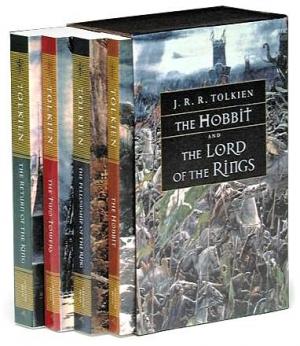
As a boy, I wanted to be as smart as my best friend Christopher. Christopher had just discovered a book called The Hobbit, a story full of wizards and magic, spiders and dragons, and goblins and good guys—those things that set my young imagination into overdrive. As he told me about what he was reading, I knew I had to get my hands on a copy of that book. To my surprise, I found a copy on the family bookshelf. To my further surprise, it was a fat book. And there were no pictures! The greatest surprise of all was that the words I started to read, given my 3rd grade vocabulary, did not translate into the exciting tale that Christopher had thus far related to me.

Determined to not be shown up by my friend, I kept at it. I skipped over Tolkien’s songs and poetry. I skimmed the lengthy descriptive passages. Eventually, I was able to pull out enough of the story to become a fan of Tolkien’s fantastical world. As I grew older, I read The Hobbit and The Lord of the Rings trilogy many times, increasing in comprehension and appreciation of that incredible world with each additional reading.

I discovered the animated film adaptations of these stories, and those helped to further fuel my zeal for all things fantasy. At one point—when our play culminated in a jousting tournament in front of our house, complete with plastic baseball bat javelins and mounts that looked more like bicycles than noble steeds—my mother had to ban me from returning to the magical world of my imagination for a time. I have to admit that I learned an important lesson in physics that day. An object in motion—say, a bicycle—will tend to remain in motion, even if a javelin is jammed into the flanks—or spokes—of the rival horse. Despite the many times prior to that moment that my younger brother had unsuccessfully tried to complete a flip on the trampoline, he successfully completed one in his not-so-acrobatic dismount from his horse that day. Luckily, no stitches were needed!
Fast forward eight years. I was half a world away in a small, under heated apartment in a rundown part of a small city of southern Estonia. My companion and I were invited to come in out of the cold winter night. I think the goodly man was afraid to act too interested, for fear of being bombarded with a call to repentance, including threats of hell fire and damnation. So, to maintain a healthy buffer between himself and the Spirit, the man refused to comply when we politely asked him to turn off his television. We quickly realized that the noise of the TV was going to be louder than the still, small voice of the Spirit; and we gathered our things to leave, even though the relative warmth of that apartment seemed so much more desirable than the cold of the winter night.
 
And then it came on. As I saw it, I instantly recognized it for what it was. The hairy, half-sized, human-looking creatures clearly had to be Hobbits. The pointy hat and long wizard robes looked just like I’d imagined in my private world of fantasy. The elves were beautiful. The Orcs looked hideously perfect! Since that day my mom had ended our “street fencing,” I had read Tolkien’s books several times. I had watched the animated movies again and again. I had even heard rumors of a live-action adaptation of those stories on the silver screen. Now, as much as I enjoyed Willow, Dragon Heart, and some of the other early live-action fantasy films, I felt that Tolkien’s tales might be ruined for me if they were not done perfectly—if the costumes, the music, and the special effects did not capture the essence of my imagination’s version of Middle Earth. But I had not realized that these rumors had any truth, and this television movie trailer came as a complete shock to me on this cold night.

I was unable to tear my eyes away from the television, even though I was normally strict about avoiding such things as a missionary. My companion elbowed me as the ad ended, and we quickly made our exit. For the duration of my mission, I can proudly say that I did not think about The Lord of the Rings movie once as I again lost myself in the work. Returning home, I felt strong reservations about watching any movie—let alone the one that had captivated my attention so vividly for 30 seconds that night—for fear that reverting to the media and other pleasures of “Babylon” too quickly might be a sign that my mission had somehow been less meaningful to me.

Almost one month after coming home, I finally allowed my older brother to drag me down to the dollar theater to see this movie that, according to my brother, was the best movie he’d ever seen. “You might know it,” he said. “I think it’s called The Fellowship of the Ring.” When the credits came to an end, the music faded, and the lights came up, I wiped a tear from my eye and turned to my brother. “I don’t know what you have going on right now,” I said, “but I’m using this dollar to go buy another ticket.” I settled for stopping by Wal-Mart on the way home to buy a CD of the soundtrack, and I listened to that music around the clock until I had an opportunity to go see the movie again a few days later.

A little more than a year later, I truly was as giddy as a little child on Christmas morning when Christmas came a few weeks early and the third movie installment, The Return of the King, premiered. And, yes, I was there at the midnight premier showing, despite the fact that I had a final for one of my classes the following morning. But neither the satisfaction I felt after watching The Fellowship of the Ring the first time nor the anticipation that encompassed me prior to the midnight showing of The Return of the King came even close to the giddiness that I felt for weeks prior to the release of the middle movie, The Two Towers.

Why? The Two Towers contains an epic battle sequence that captured my imagination as a youth. Tens of thousands of Orcs surround a fortress that stands as the last defense of a vastly outnumbered good against an overwhelming evil. In my mind, that epic battle represented the war to end all wars, the ultimate contest between good and evil. And the teasing glimpses of this battle that the movie trailers provided did not disappoint. When I finally got to see the movie, the emotions I felt during that war of wars were even more powerful than I imagined possible. Let me tell you why.

As a missionary, in reading the Old Testament, I discovered a story about a nameless man, a “servant of the man of God.” In reality, I’m not sure what this servant looked like; but, to this day, I can imagine his pointy ears and features that are more elf-like than human. In this story, Saruman, the leader of the Orcs (Syria), conspires to lay a trap for Theoden, the king of the humans (Israel). With the counsel of Gandalf—or the man of God, the prophet named Elisha in the scriptures—Theoden is able to avoid the trap. Saruman is furious that his plans have been foiled. From his spies, he learns that the man of God, a seer, is able to see inside his private chambers and know of his secret plans—probably using a magical palantir. So he sends an enormous army to take and capture Gandalf in a place called Dothan, otherwise known as Helms Deep.
The “servant of the man of God”—we’ll name him Legolas—arises early in the morning. From here, the Old Testament brushed over some of the more important story elements. So I’ll exercise a little literary license as I continue. Legolas climbs up to the upper ramparts to look out over the valley below the fortress. Aragorn, the commander of the Israelite garrison stationed at Helms Deep, asks, “Legolas, what do your elf eyes see?”
Legolas senses that all is not right. “The stars are veiled. Something stirs in the East. A sleepless malice…” His uneasiness grows. “The eye of the enemy is moving. He is HERE!” Suddenly the fog lifts and Legolas can see that a vast host compassed the city both with horses and chariots. 
Gimli, an especially short soldier who is unable to see over the wall, asks, “What’s happening out there?”
Legolas: "Shall I describe it to you?"
Gimli: "Hmm?"
Legolas: "Or would you like me to find you a box?"  
Humor aside, Legolas grows serious and, after surveying the small garrison that would stand against this adversary that was too vast to number, turns to Aragorn. “Look at them. They’re frightened. You can see it in their eyes.”
As the soldiers look in his direction, Legolas begins to speak in Elvish so as not to be understood. “And they should be. Three hundred… against ten thousand! Aragorn… they cannot win this fight. They are all going to die!” 
Aragorn speaks in a loud voice that can be overheard by those in his command, “Then I shall die as one of them!” 
Gimli steels himself for the battle to come. “Never thought I’d die fighting side by side with an Elf.”
Legolas answers his companion, “What about side by side with a friend?”
Gimli grasps his ax. “Aye. I could do that.” 
Just then, the man of God comes upon the ramparts and Legolas’ courage begins to crumble. He turns to Gandalf his master in fear, “Alas, my master! How shall we do?”
Gandalf looked upon Legolas with compassion and said, “Fear not: for they that be with us are more than they that be with them.” 
The Old Testament then clarifies that wizards sometimes pray rather than relying solely upon their magic. Elisha, also known as Gandalf, prays, “Lord, I pray thee, open his eyes, that he may see.” 
Gandalf urges his servant to “look to the East.” In that moment, the eyes of the servant named Legolas are opened, and he saw: and, behold, the mountain was full of horses and chariots of fire round about Elisha.
From here, the Old Testament is more clear on the details of the Battle of Helms Deep—I mean Dothan—and I can take less literary license. Gandalf prays to the Lord requesting that the host of enemy Orcs be smitten with blindness. The confused and blinded Orcs are then led by Gandalf away from the fortress to Samaria, a stronghold defended mightily by King Theoden. Gandalf again prays, this time asking that the Orcs eyes are opened. The enemy army now realizes that it is surrounded and vastly outnumbered by Israel. Gandalf then urges Theoden to feed and provision his captives before sending them away to their own lands without bloodshed. The scriptures provide the following conclusion to this story, “So the bands of Syria came no more into the land of Israel.”
Now, my Tolkien-esk version of the story had a bit more fighting to it than the one told in the scriptures before Gandalf rides in from the East at first light of the fifth day with his heavenly host of angelic reinforcements made of fire. In fact, there’s enough fighting for Legolas and Gimli to have a friendly contest over who can kill more of the enemy. Legolas wins.

This isn't the only story from the scriptures that my imagination has been able to twist into something more suited to the fantasy bookshelves of the library. But as a story like is able to plays out in my imagination, and on the big screen, the spiritual significance deepens and the message is able to take root in my heart.

So what is Tolkien’s sermon to my heart in his epic retelling of the scriptural Battle of Dothan? It is a simple sermon, characterized by two words: Fear Not! We can find these two words together 87 times in the scriptures as good men and women like Paul, Mary, Daniel, Abraham, the servant of the man of God, and many others including you and I are counseled to not fear.

Now I have a young daughter who sometimes wakes up in the middle of the night after an especially vivid nightmare. As I scoop her up in my arms and hold her close, I tell her there’s nothing to be afraid of. I tell her to fear not. As a father, I've learned that it’s not enough to simply tell her to fear not. As a heavenly father, God has learned this as well. Each time that He tells one of His children to fear not, he provides additional comfort and reasons to not be afraid. Fear not, for ____ (fill in the blank).

Some examples? Fear not, for: 
God shall be with you forever and ever; with me thou shalt be in safeguard; I am thy shield and thy exceeding great reward;  [thy enemies] are in mine hands; if ye are built upon my rock, [thy enemies] cannot prevail; God will deliver… all those who stand fast in that liberty wherewith God hath made them free; thou has found favour with God; thy prayer is heard; it is your Father’s good pleasure to give you the kingdom; in me your joy is full; the Lord will do great things; ye are of more value than many sparrows; I am the first and the last; I will help thee; I have redeemed thee, I have called thee by thy name, thou art mine; it shall be well with you; I will do to thee all that thou requires; you are mine, and I have overcome the world, and you are of them that my Father hath given me; whatsoever ye sow, that shall ye also reap; I bring you good tidings of great joy, which shall be to all people; I am thy God and will still give thee aid, I’ll strengthen thee, help thee, and cause thee to stand upheld by my righteous omnipotent hand; they that be with us are more than they that be with them.
How’s that for a scriptural security blanket? Doesn't that make you want to just curl up in your Heavenly Father’s arms for a while? If so, you simply need to open up your scriptures. Curling up in a warm blanket is optional.

I have to admit that much of my life is governed by fear. Gordon B. Hinckley would have the following to say to me regarding my fears:
Who among us can say that he or she has not felt fear? I know of no one who has been entirely spared... Some are able to rise above it quickly, but others are trapped and pulled down by it and even driven to defeat. We suffer from the fear of ridicule, the fear of failure, the fear of loneliness, the fear of ignorance. Some fear the present, some the future. Some carry the burden of sin and would give almost anything to unshackle themselves from those burdens but fear to change their lives. Let us recognize that fear comes not of God, but rather that this gnawing, destructive element comes from the adversary of truth and righteousness. Fear is the antithesis of faith. It is corrosive in its effects, even deadly. 
“For God hath not given us the spirit of fear; but of power, and of love, and of a sound mind.” 
These principles are the great antidotes to the fears that rob us of our strength and sometimes knock us down to defeat. They give us power.
I like that. The attributes Paul described to Timothy of power, love, and a sound mind are the antidotes to our fears. John added emphasis to one of these antidotes in saying that perfect love casteth out all fear. From all of this, we learn that fear is the opposite of faith. So, simple faith in Jesus Christ and in our Father in Heaven is perhaps the greatest antidote of all.

There will be times when we feel trapped by our fears and pulled down by it, even to the point of defeat. Our Elven eyes may, like those of Legolas, spy an incredibly vast army of the adversary standing at our gates. What our Elven eyes are unable to see is what Elisha prayed for his servant to see. When we exercise perfect love, a sound mind, and faith in God and pray for a loftier vantage point from which to survey the scene of battle before us, then are our eyes opened. Then can we see spiritual evidence that they that be with us are more than they that be with them. But until our eyes are opened and we can see the heavenly host with our own eyes, we must place our trust in our Father—that He truly is with us and stands ready to help us in every way.

Very few of the armies we face in life can be confronted with sword, bow, or ax  But we are not left without instruments of war. We have Paul’s sword of the Spirit, which is the word of God, to use as our only offensive weapon. And we have the whole armor of God wherewith to defend ourselves: the breastplate of righteousness; iron boots of the preparation of the gospel of peace; loin coverings of truth; the helmet of salvation; and, above all, the shield of faith. After equipping us from the armory, what is Paul’s pre-battle speech? Pray always with all prayer and supplication in the Spirit, and watch thereunto with all perseverance and supplication for all saints. Peace be to the brethren, and love with faith, from God the Father and the Lord Jesus Christ. Grace be with all them that love our Lord Jesus Christ in sincerity. Amen.

Aragorn, Tolkien's once and future king provides the following pre-battle speech that stirs my soul and moves me to draw my sword in defense of all that is good: "Hold your ground, hold your ground. Sons of Gondor, of Rohan, my brothers. I see in your eyes the same fear that would take the heart of me. A day may come when the courage of men fails, when we forsake our friends and break all bonds of fellowship, but it is not this day. An hour of wolves and shattered shields, when the age of men comes crashing down, but it is not this day. This day we fight! By all that you hold dear on this good Earth, I bid you 'stand, Men of the West!'"

These are the kind of words that awaken that boy inside of me who proudly brandished his Wiffle Ball bat  as he held his cardboard shield high. No fear was allowed to dwell in this young heart, as this child full of courage, faith, and hope for a bright and heroic future schemed to conquer the most fearsome of dragons, the most hideous of giants, and the most evil of sorcerers.

It is the worries of the world that wax heavy with age and turn a heart to fear and to a lack of confidence. But as we hear the call to battle and raise our banners alongside the titles of Aragorn, Paul, Moroni and countless other commanders in God's Army, in memory of our God, our religion, and freedom, and our peace, our wives, and our children, we may come forth in the strength of the Lord, knowing that we have good cause to fear not--for the Lord will fight our battles for us as we stand still and see the salvation of God.

When I go to the movies tonight, there may be some at the theater who literally suit up in armor and other Middle Earth paraphernalia in their excitement and giddiness for the long-awaited movie. My personal fandom only extends so far, and I will not be among them. I will, however, be wearing my spiritual armor as I venture out into the enemy’s domain tonight. No, I don’t believe that the movie theater or any other public facility is inherently evil. But the Lord has taught that our homes are temples, where we can control who and what comes in. Any time we leave the safety of our temples, we should suit up. Perhaps we would do well to leave our armor on, even when we are safely at home, given the outside influences that are seeking to find a way in through technology and the media.

So will you join me and suit up in the whole armor of God, knowing that God will fight our battles for us and be with us every step of the way? As we enlist in the army of God, we can overcome our fears. We can also be assured that we are on the winning side, because there is no question of which side will be triumphant in the last day.
Onward, Christian soldiers! Marching as to war,
With the cross of Jesus going on before.
Christ, the royal Master, Leads against the foe;
Forward into battle, See his banners go!

At the sign of triumph, Satan’s host doth flee;
On, then, Christian soldiers, On to victory.
Hell’s foundations quiver at the shout of praise;
Brothers, lift your voices, Loud your anthems raise.

Like a mighty army moves the Church of God;
Brothers, we are treading where the Saints have trod.
We are not divided; All one body we:
One in hope and doctrine, One in charity.

Onward, then, ye people; Join our happy throng.
Blend with ours your voices in the triumph song:
Glory, laud, and honor unto Christ, the King.
This through countless ages men and angels sing:

Onward, Christian soldiers!
Marching as to war,
With the cross of Jesus
Going on before.

Saturday, December 1, 2012

The Faith of an Engineer (Special Extended Edition)

When I first began writing my Sermons of the Heart, my goal was to simply have an outlet to share ideas and inspiration that cross my path in everyday life. Over time, I've realized that my thoughts and writings are mostly for one person, and that is me. Yes, my words may mean something to my children or grandchildren someday. They may even mean something to one of you, if you've stumbled across my writings. But, in very large part, I have been richly blessed by my Heavenly Father to feel inspiration from the most ordinary of sources and to have words fill my mind and my heart that demand to be set free into writing.
 
I've also learned that those words of inspiration that I am blessed with sometimes need to be expressed in other ways. When writing about the Latter Day Saint or Mormon pioneers, I was touched by a song that shared the simple truth, "God gave us voices, but we make them sing." As I wrote about some pioneer stories that were meaningful to me, I couldn't help but wonder what melodies and lyrics comprised the songs that those faithful men and women gave voice to through their faithful and inspirational lives. At the same time, I knew what melodies and songs came to my mind when I read their stories. And I felt that my words and message in sharing their stories was incomplete unless I coupled those stories with those powerful melodies that inspired me.

This presented me with a dilemma. I needed my words to be recorded so I could do some audio engineering and put those words to this music. But who could I convince to record these words? This was just a simple project that meant something to me, rather than anyone else. And I didn't have the spine to ask anyone. So I bit the bullet and recorded my own voice. This was especially difficult for me, because there is little that I despise more on this earth than the sound of my recorded voice. But putting my words into a format that made my message feel complete, the way they felt in my mind and my heart was important enough to me to record myself anyway.

As I completed that project and put music with the words, I experienced something of a miracle, or a tender mercy as David Bednar might say. The music seemed to swell and grow with the words of those stories at just the right places, in ways that I didn't design or engineer. The message brought entirely new meaning to me as I listened to something that I had written, recorded, and engineered, but something that didn't feel like it came from me at all. It felt like it came from a much loftier source. It was indeed a tender mercy.

For my next sermon, I determined to try again and see if I might experience that same tender mercy of having the words and feelings of my heart played back to me in such a Spirit-enhanced format. I wasn't disappointed. Since then, I've created audio versions, or podcasts, of most of my sermons. I still loath the sound of my voice. But hearing such a complete and authentic representation of the contents of my heart is such a neat experience that I keep at it each time I feel inspired to write.

A few months ago, I was again listening to one of these podcasts, one that compared Jesus Christ to Superman, entitled Hero of Heroes. But as I listened, as with my experience with the pioneer-themed sermon, I felt that this one was also incomplete. Something was missing. Since the message involved dialogue from several Superman movies, my audio version used actual audio from those movies. But, as I thought about it, I now felt that my message was not complete without also including the video from those movies. So I began a new project to learn about video editing and to turn my message, that had evolved from written words to audio, into video as well. The project was a fun one for me, and it turned out beautifully, representing my heart perfectly.
In looking forward to Christmas, many things have been on my mind. But the thoughts that seem to dominate my mind and heart relate to my Christmas-themed sermon from last year, entitled The Faith of an Engineer. As with Hero of Heroes, I felt that my words, based in large part on several scenes from the Christmas movie The Polar Express, were still incomplete in written and audio form only. 

And so, I've created a video version of my message, simplified and edited to focus on the powerful message of faith from that movie. After finishing my editing and publishing my video, I watched it in its entirety for the first time. Although I knew exactly what was in the video, even my exhaustive efforts in creating the video did not prepare me for the rush of emotion and the Spirit that I felt as I watched.

So as my Christmas gift to you, I would like to share this Special Extended Edition of The Faith of an Engineer. Feel free to let me know how the message of The Polar Express touches you. I hope it does. And if you enjoy this, I simply ask you to share this with a friend as well.
Merry Christmas! May your hearts be touched by Him whose birth we celebrate as you more fully allow yourself to Believe.